
From team members with rock star spirit to emergency hot chocolate on a cold night, this São Paulo restaurant goes all-in on personality.
It's been almost a decade since chef Luiz Filipe Souza opened Evvai, then an upscale Italian restaurant in São Paulo's Jardins neighbourhood. In the years since, there have been a few changes: the restaurant has evolved into a fine-dining address (and has three Michelin stars to prove it), while the tasting menu riffs on ingredients and ideas from Italy and Brazil. Think tortellini in tacacá broth with a touch of tongue-numbing jambu, or the signature rigatoni, crafted from curls of peach palm heart.
Its concept evokes São Paulo's history of Italian immigration, as well as a more personal story: Souza's great-grandfather, Alfredo, emigrated to Brazil from Veneto.
The restaurant's celebratory name – Italian for hooray – has proved prophetic, with a slew of awards and accolades. Now, it's won the Art of Hospitality Award 2026, sponsored by Johnnie Walker Gold, as part of The 50 Best Restaurants Latin America.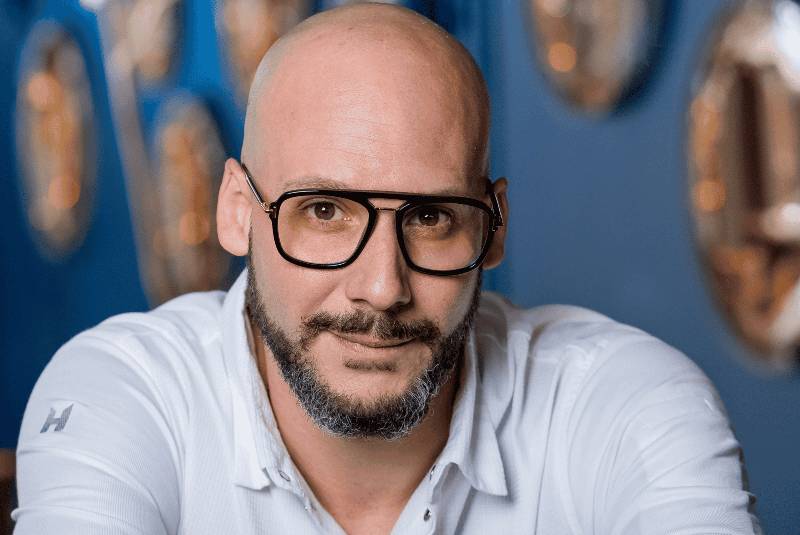
Souza coined the phrase 'Oriundi cuisine' at Evvai, which refers to descendants of Italy all over the world
It's the most important yet, says Souza. "It recognises a lot of things that aren't always celebrated. Often, people talk about the food and the chef, but the people behind a restaurant are what really give it life."
So, what elevates the service and makes the experience next-level? Chef Souza and restaurant manager Jac Pessoa reveal the inside story.
There's personality in spades
While service at this level is exacting, individuality matters. "Different personalities are essential," says Pessoa. "We don't want people trained to speak, smile and behave in exactly the same way."
Each person operates differently, she says, though with the same consistency of care. "There is respect and precision, of course, but also personality." Both she and chef Souza namecheck Tatini, a long-serving member of staff who welcomes guests to the restaurant. "He's extremely elegant and courteous, but he has the soul of a rock star," she says. "That combination says a great deal about Evvai."
The playlist doesn't play it safe
Don't come here expecting standard background jazz; Souza chooses the tunes himself, and they're reliably eclectic. Self-conscious cool has no place on his playlist, which might run from Donna Summers to A-ha, via a spot of bossa nova.
"We didn't want to overthink it, or make it too cerebral," he says. "Like the menu, it has a flow that you can feel, without being too linear." The aim is to be true to himself, but also connect to guests, tapping into memories and emotions.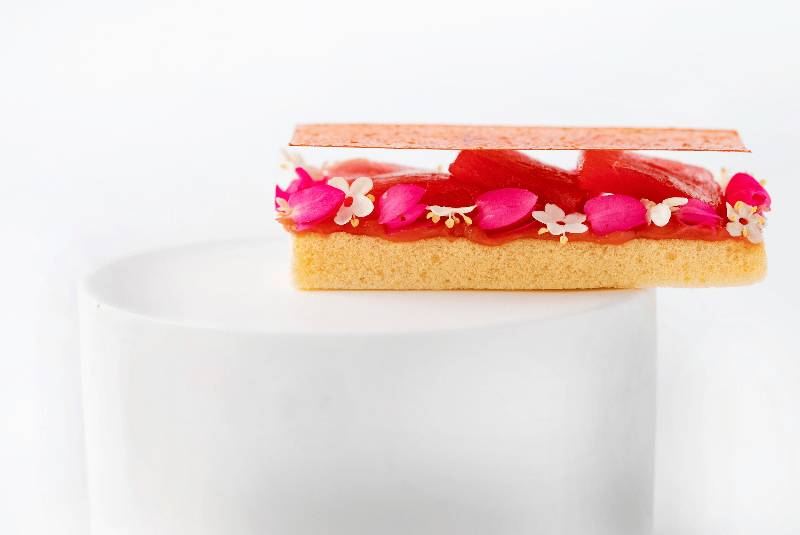
Evvai's creatively plated menu is as eclectic as the setting, playlist and service style
It's a tablecloth-free zone
"I don't like the kind of restaurant where you walk in and feel you need to be very formal – that's not comfortable for anyone," says the chef. "When we started out, the restaurant was more casual, and I think we've carried over a few things from that."
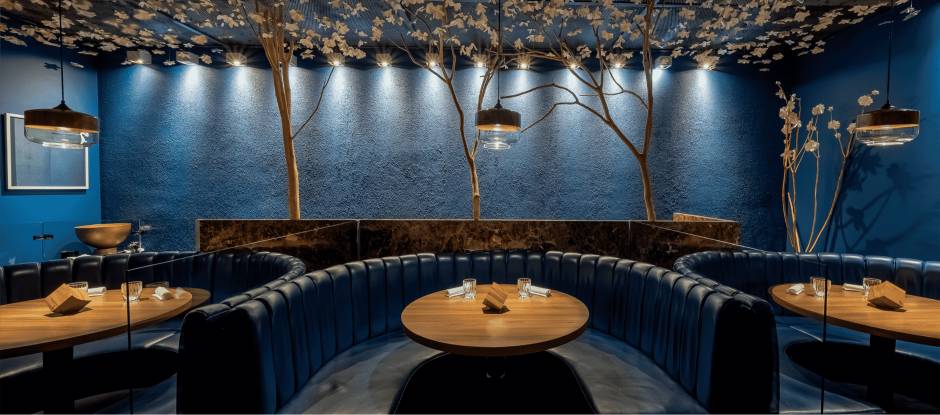
You won't find hushed formality or starched tablecloths in Evvai's dining room, despite its storied reputation. "There's music, movement and conversation," Pessoa agrees. "We didn't want a room that makes people stiffen up or feel they have to play a part."
The staff can read your mind...
While that may not be strictly true, they're incredibly intuitive – paying close attention to guests' cues is the cornerstone of service here. It's easier thanks to the scale: with just 14 tables and a maximum 60 guests per night, a maître d' (supported by a waiter and sommelier) is never responsible for more than three or four tables.
"We're always observing, without making people feel watched," explains Pessoa. "A glass that is almost empty, someone searching for something with their eyes, a conversation that calls for more privacy – these are small but important signals. If you can care for someone without them being constantly aware of it, service feels intuitive, and at times, almost invisible."
...and they may well know your favourite wine
After every service, staff jot down detailed notes on each table. They cover all kinds of things, says Pessoa: "Which table guests sat at, what they drank, what they particularly enjoyed, who they came with, the pace they preferred, perhaps even small conversations." If you come back, those notes form part of the pre-service staff briefing.
It's not about impressing anyone, she says, but creating continuity. "Being recognised is one of the most beautiful forms of welcome. It means the relationship doesn't have to start from scratch every time."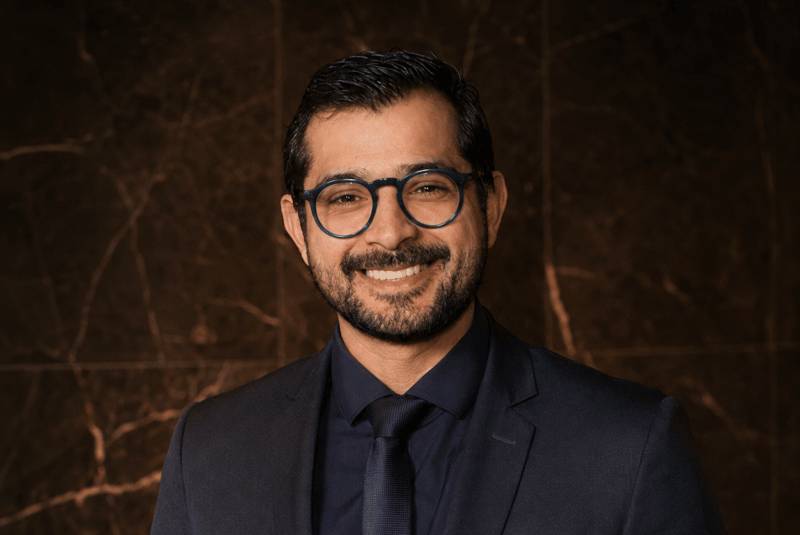
Marcelo Fonseca is the award-winning sommelier forming part of the front-of-house team
You get a card with every course
Each course comes with a card, featuring a playful illustration drawn by Souza, with notes on the dish on its reverse. It began during the Covid-19 pandemic, when masks made communication harder, but became an invaluable tool even when restrictions were lifted.
Instead of overly long tableside descriptions of each dish, the cards allow guests to absorb information as and when they like. What started out as pen-and-paper sketches have evolved into tiny works of art, that people often take home and frame. "It's beautiful," says Pessoa. "A dining experience is so fleeting, but the cards are a small way of prolonging that moment."
It's not as easy as it looks
Make no mistake: this kind of hospitality is demanding. "There's enormous complexity behind great service," says Pessoa. "Our job is to make sure it's completely invisible to guests." It's an intricate choreography, from the routes staff follow through the dining room to the glances they exchange, and the timings between dishes. It starts long before the doors open, from setting up the space in the morning to the table-by-table team briefing, held at 6pm.
"By the time a guest arrives, a great deal has already happened," says Pessoa. That includes giving careful thought to who should be assigned to every table. "We think about who on the team might form the most natural connection."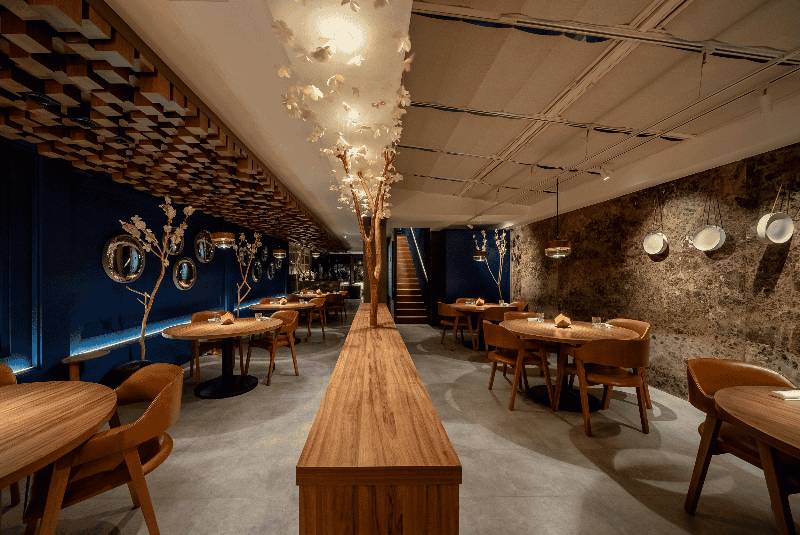
Service is always warm and often personalised, creating a welcoming atmosphere
There's no set script
With that framework of service in place, there's space for spontaneity. "That's what brings it to life," notes Pessoa. "It might be the hundredth time we've served a certain dish, but we need to deliver the same excellence, without turning hospitality into repetition."
Chef Souza recalls one particular service on an uncommonly cold day in São Paulo. "No one here's prepared for chilly weather, so everyone was feeling it. Jacqueline had the idea of serving hot chocolate when guests arrived. It wasn't anything fancy, but the effect was amazing; it became one of those magic nights." Even when things go awry, he says, it can be an opportunity. "What matters is how we manage it – that's what guests will always remember."
You'll leave with a spring in your step (and possibly a brownie)
At Evvai, hospitality extends beyond the end of the meal. "Behind the scenes, we try to look after that transition back to the outside world," says Pessoa. "When the person gets up, we want their car to be waiting, or their taxi to be on its way."
Guests are also given mementos of the evening: the menu, that set of illustrated cards and a brownie or something sweet, made by pastry chef Bianca Mirabili, winner of Latin America's Best Pastry Chef Award 2025. More than that, Pessoa's hope is that guests leave feeling different. "Happier, lighter, moved, perhaps even restored in some way. And that's something that goes far beyond food."
The list of The 50 Best Restaurants Latin America 2026 will be revealed on 1 December from Guadalajara, Jalisco. Discover the restaurants featured on 2025's ranking before the latest edition is unveiled.
10 details that make a meal at Evvai worth the trip

Sign Up to Discover More
- Save top venues and articles
- Create and share your own lists
- Receive our weekly newsletter