

From crispy empanadas and hearty stews to the gold standard of pisco sours, this is where to eat and drink like a local.
Take indigenous Mapuche tradition, add a sprinkling of Spanish colonial cooking and a pinch of European culinary influence – stir together and you have Chile on a plate. By virtue of the country's landscape – a long coastline, fertile valleys and high mountains – fresh ingredients feature heavily in its cuisine, from fish and grilled meats to corn, potatoes and beans.
Nowhere is this better savoured than in the capital, Santiago. On the city's cobblestoned streets and in its shady plazas, you'll find lively food markets and corner 'kioscos' alongside a new wave of fine-dining restaurants helmed by innovative chefs, all of them championing Chilean produce. Here's what to order in Santiago – and where.
Cazuela de ave
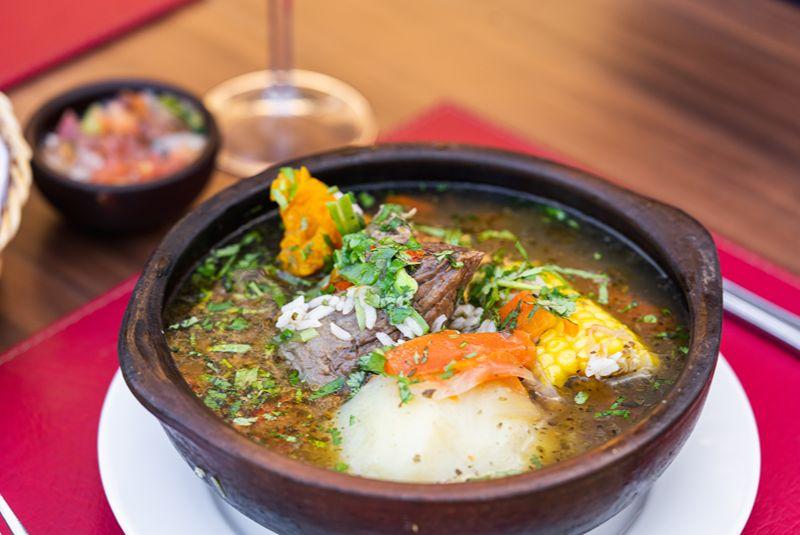
Cazuela de ave is Chile's national dish. It's a clear soup-stew that brings together chicken drumsticks or thighs which are simmered in a broth with squash, potatoes, carrots, corn-on-the-cob and plenty of herbs in a greda (a red clay or earthenware pot). Some people add rice or use marrow bones for richness. But while recipes vary slightly, the centuries-old tradition of sitting round a table slurping on a bowl of cazuela remains unchanged. Enjoy it like a local by drinking the soup first, then eating the rest.
Try it at: Divertimento Chileno is a traditional, family-owned restaurant in Santiago that's renowned for doing the Chilean classics well, including cazuela de ave.
Pantrucas
When Chileans are looking for a soul-warmer, they hunt down a bowl of pantrucas. The soup starts off as a savoury broth made with beef, pork or chicken stock, before pieces of meat, potatoes, vegetables and seasoning are added. Next, the pantrucas themselves – fresh noodles made from wheat flour, water and salt which have been rolled out very thin and torn or cut by hand into squares or strips – are dropped into the simmering liquid. Indeed, the name of the dish stems from the Mapudungun word pangkutra or pangtruka meaning 'soup made with dough pieces'.
Try it at: 99 Restaurante, where Kurt Schmidt's tasting menu leans into the terroirs of Chile. The food may sound simple on paper, the technique of each dish is anything but, with Schmidt adding a twist to the traditional, including pantrucas (here, often served with rabbit).
Empanadas de pino
Chile's indigenous communities started making empanadas after the Spanish conquest, when wheat and beef first came to their shores. Indeed, the word 'pino' is derived from the word 'pinu', which translates as 'pieces of cooked meat'. There are different variations, but inside the golden pastry, you'll typically find ground beef, slow-cooked onions, a black olive, a slice of hard-boiled egg and raisins. As well as being a popular Sunday lunch staple, they're also widely eaten during Fiestas Patrias, the September holiday commemorating the day Chile gained independence.
Try it at: La Violette is regularly voted the best spot in Santiago for empanadas de pino, which are made to a family-honoured recipe. For a truly authentic version of this popular snack, join the queue.
Ceviche
(Image: Alvaro Barrientos)
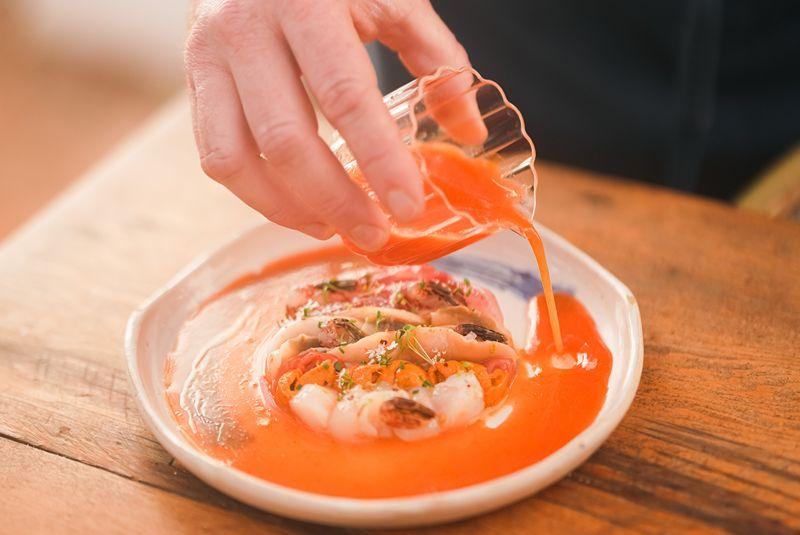
Ceviche – raw fish marinated in zingy citrus juices – is most commonly associated with Peru where it originated some 2,000 years ago but Chile has its own distinct take. A milder version than its neighbour, ceviche chileno is usually made with local firm white fish such as reineta, halibut or toothfish, which is marinated in a blend of lime and grapefruit juices (or lemon juice) to bring a touch of sweetness. Garlic, onions and smoky chilli pepper merkén is also added, as well as fresh mint and coriander, diced bell peppers, tomatoes and perhaps a splash of pisco.
Try it at: Brothers Max, Juan Pablo and Domingo Raide opened Casa Las Cujas on the beach in Cachagua in 2012 – six years later came their Santiago outpost in Vitacura. You might not be by the sea, but order the 'ceviche de la costa chilena' and you'll feel like you are.
Sopaipillas
Known as the 'king of Santiago street food', these discs of deep-fried dough are the city's ubiquitous on-the-go snack. It's been that way for centuries, with the sopaipilla dating back to Spanish colonial traditions. The Chileans added their own twist, incorporating smashed pumpkin into the dough, giving it a vibrant orange hue. Some like to eat it with a salsa pebre (a condiment similar to Mexico's pico de gallo, with finely chopped tomatoes, onions, garlic, chilli, coriander, vinegar and oil), mustard or hot sauce. The sweet-toothed prefer to cover theirs in chancaca, an unrefined sugar that's boiled up to become a rich, spiced syrup.
Try it at: One place you're guaranteed to smell the aroma of frying pumpkin dough is La Vega Central, Santiago's never-dull food market in the historic La Chimba neighbourhood. Buy the sopaipillas ready-to-eat as you explore the 500+ stalls or as fresh dough to cook at home.
Pastel de choclo
Pastel de choclo may sound like a sweet treat, but it actually translates as 'corn cake' or 'corn pie'. The Chilean dish is traditionally cooked in a clay dish inside a wood-burning oven (though in the city, a normal baking pan and standard oven will suffice). See it as a Chilean spin on shepherd's pie – a combination of ground beef cooked with onions, garlic, paprika and cumin, layered with pieces of cooked chicken, black olives and hard-boiled eggs beneath a topping of freshly ground choclo (corn), sprinkled with sugar to ensure a layer of caramelisation.
Try it at: Mestizo in Parque Bicentenario, a buzzy outdoor restaurant by the fountains that serves up a contemporary spin on all the Chilean favourites (ceviche, empanadas, wood-grilled meats) including their signature pastel de choclo.
Mote con huesillo
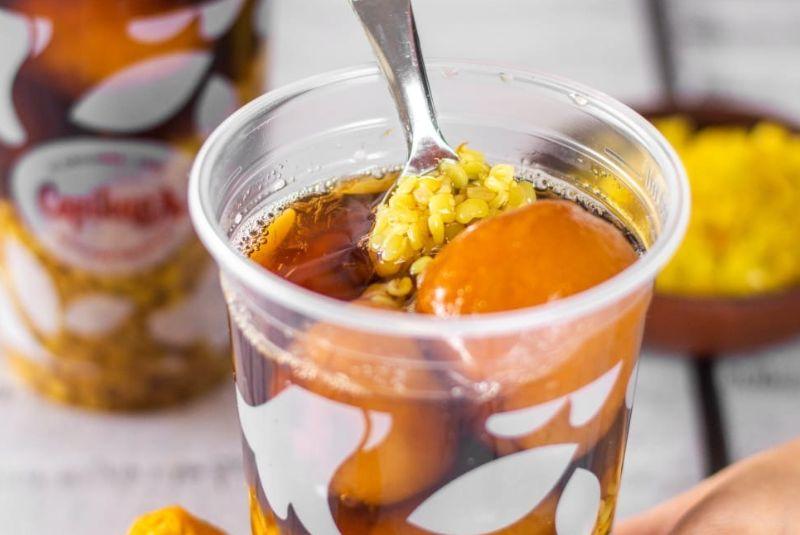
When the temperature soars in Santiago, the locals reach for a glass of thirst-quenching mote con huesillo. So traditional is this non-alcoholic drink-dessert, there's even a local saying 'Más chileno que el mote con huesillo' or 'More Chilean than mote con huesillo'. It's made by rehydrating dried peaches (huesillo) in water with cinnamon and chancaca (unrefined cane sugar), then adding cooked mote (husked wheat) before chilling and serving.
Try it at: In warmer months, there are pushcarts and stands around the plazas and parks, but if you're looking for a mote con huesillo with a history, the team at El Rey del Mote con Huesillo on the edge of the Parque O'Higgins neighbourhood have been selling their family recipe for over 90 years.
Humitas
Craving something comforting? Humitas – the Chilean corn pudding made from freshly ground corn kernels, finely chopped onions cooked in butter or lard with ají de color (a ground paprika/red pepper spice) and fresh basil – have you covered. The mixture is then wrapped in corn husks (chalas), before the little packages are tied with twine and either boiled or steamed. The first recorded humitas (the name comes from the Quechua word humint'a) date back to the 19th century in Chile.
Try it at: There are many spots where you can buy authentic humitas in Santiago but a favourite is El Parrón, a family-run restaurant located on Avenida Santa Rosa in the heart of the Franklin barrio.
Choripán
In South America, an asado sandwich is traditionally when the leftovers from the asado (a slow-cooked meat feast grilled over wood or charcoal) are made into a meaty snack. It originated in the 19th century when gauchos – Latin America's nomadic horsemen – cooked meat on open fires and put it in bread for a quick, simple meal. A portmanteau of chorizo (sausage) and pan (bread), choripán consists of a seasoned pork sausage, grilled whole or butterflied and served in a crusty white roll, often with chimichurri or salsa.
Try it at: There are specialty choripanerías but you'll also find this grab-and-go snack at one of the many 'kioscos' that line streets. If you're in the centre of Santiago look out for the striped yellow awning of Kiosk Roca, where they serve their chorizo in a hallulla, a round, flat bread.
Pisco sour
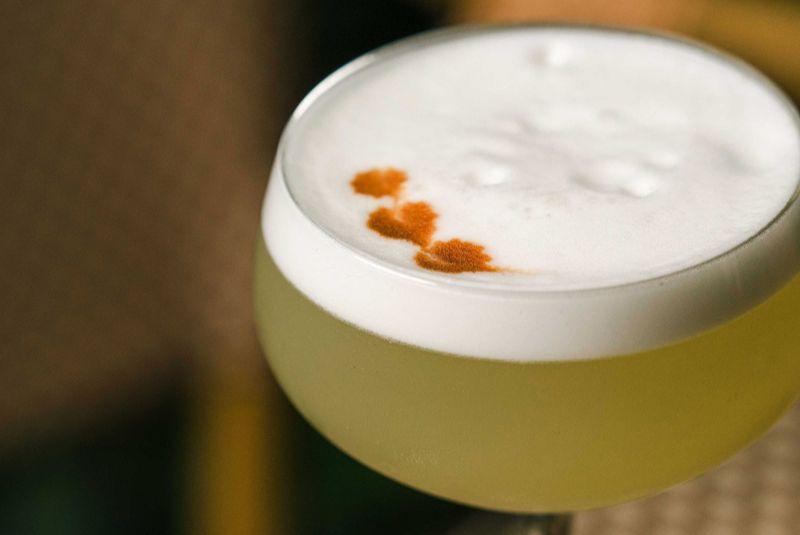
The pisco sour is the continent's most classic cocktail. It's typically made from pisco (a grape brandy), fresh lime juice, a simple sugar syrup and egg white, finished with a sprinkling of aromatic bitters. The Chileans like their version with a twist, using aged pisco distilled from certain grape varieties, tart Pica lime juice or local lemon juice, and powdered sugar rather than a simple syrup. The frothed egg white is optional and can be replaced with blended or shaken ice.
Try it at: Ambrosia, a family-run restaurant in the upscale Vitacura neighbourhood, Carolina Bazán and her team serve classy comfort food alongside some of the best cocktails in town. Start with a pisco sour – the acidity levels are perfect for whetting the appetite.
The list of The 50 Best Vineyards 2026 will be revealed in Santiago, Chile, on Wednesday 18 November.
