
From music as an essential ingredient to dishes designed to evoke memories, the multi-course experience has entered a new era focused on joy.
Fine dining is still shaking off an image of stiff formality. But today's reality is far from this stereotype. From Bangkok to rural Wales, a shift from the solemn and regimented to the interactive, immersive and fun is palpable.
The roots of this transformation go back to movements like bistronomy, which brought world-class technique and produce into casual settings. Consequently, haute cuisine's monopoly on exceptional cooking was served, and it began to be seen as too abstract and precious. "We were forgetting why people and diners went out to eat in the first place," says Hussain Shahzad, the chef behind Papa's in Mumbai, which he describes as: "to be entertained, to feel special, to feel seen." Gareth Ward of Ynyshir in rural Wales agrees, putting the emphasis on entertainment: "Going out and having a meal is all about having a night out. It's two for one." 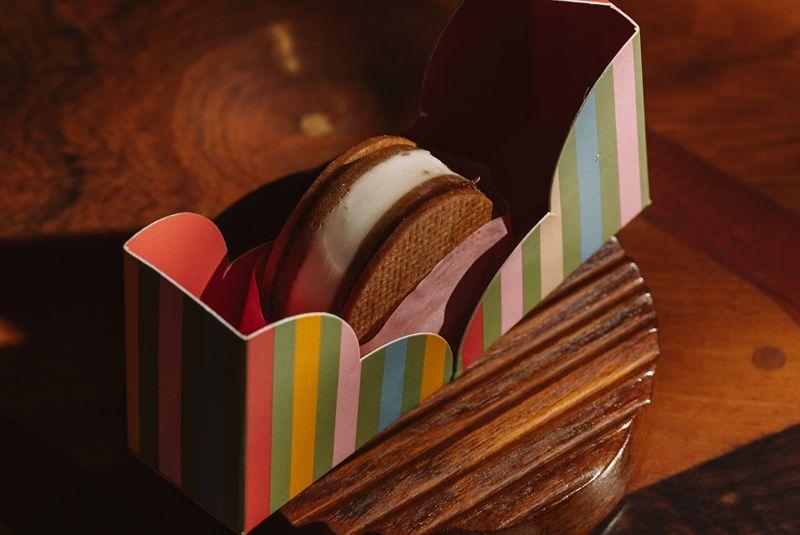
The blue cheese and fig sandwich at Papa's arrives in a nostalgic fun-fair carton
Gaggan Anand of the eponymous Gaggan in Bangkok puts it down to a broader context. "The internet is homogenising fine dining," he pointedly observes. "It has cannibalised fine dining." Restaurants are reacting to this by directly cultivating distinctive identities.
"A great fine dining restaurant will transport you somewhere else," says Santiago Lastra, founder of Kol in London. "They transport you to their world. It's the same as watching a movie." This is why he has recently adjusted the layout of the restaurant, with the former Mezcaleria bar downstairs now absorbed into the evening service. Lower lights and a more upbeat vibe keep guests stimulated, and the pivot gives them the feeling that the whole building is part of the narrative.
At the Smoked Room in Madrid, the fire-led kitchen can generate an atmosphere on its own, with smouldering theatricality, fire-driven plates matched with 20 wines poured by world-leading sommelier Luis Baselga. The aim is to recreate the primal memories of sitting in front of a fire that we all share. "It's something magic," says head chef Massimiliano Delle Vedove. "It's relaxing, it gives you this feeling of peace."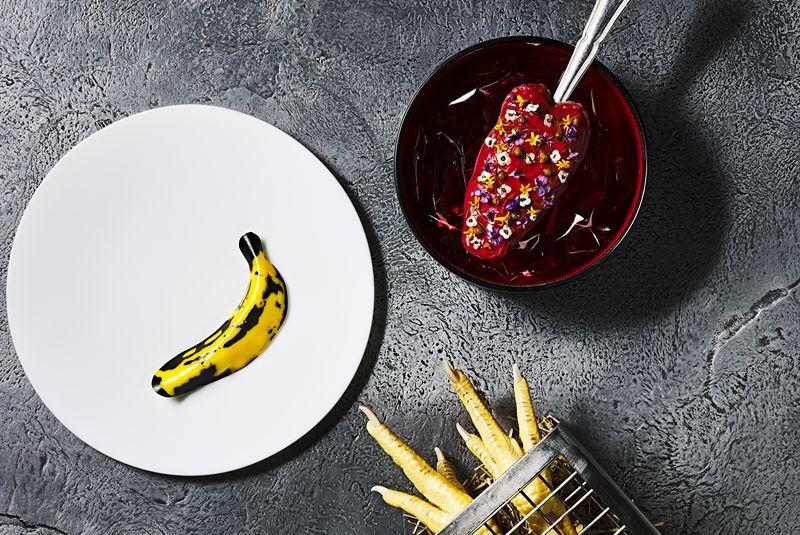
Alchemist's tongue dish (right) presents beef tartare on a non-edible silicone human tongue mould
Creating a fantastical world is one thing, but sustaining it across an entire evening is another. Looming over this movement is Copenhagen's Alchemist, perhaps the most extreme expression of this concept: a 35-course, six-hour, multi-room spectacle of projections, symbolism and edible provocation. But the restaurant's creator Rasmus Munk is clear that it needs pacing. "Among 35 dishes there are probably seven to eight that have strong political or environmental statements built in," he says. "We space them out... intermingled with fun, surprising, or just moreish dishes."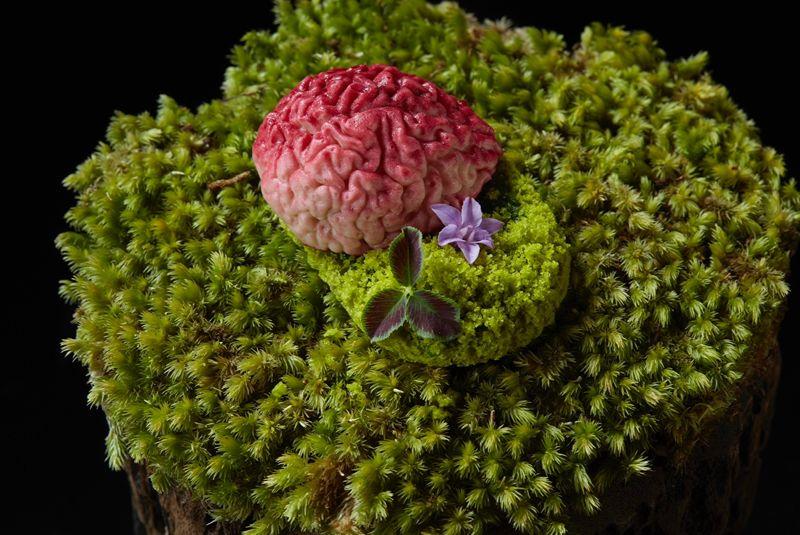
Gaggan's menu is designed to playfully deceive the senses, and includes signature dishes such as The Rat Has Brains
Building that emotional rhythm takes planning, and music is one of its most powerful levers. "Humans have many senses, so why do we use only eyes and nose and mouth in a dining experience?" asks Anand. During a meal at Gaggan, a 14-seater chef's table built around an open kitchen and a disco ball, accompanied by a curated playlist, "you will get sound, light, camera, splashing, speed, adrenaline – all together," he says. "And with the first dish you put in your mouth, explosions happen."
Another restaurant with a disco ball is Ynyshir in the Welsh countryside. Like at Gaggan, the soundtrack acts in parallel to the food service. But here, it's up to the DJ, who plays a different set each night, but always begins with Japanese jazz to accompany a first section of madai, hamachi and bluefin tuna, before moving into upbeat house, with Bronski Beat's Small Town Boy dropping as the disco ball starts spinning. "I've seen people cry in the restaurant," Ward notes. They are swayed by "this unbelievable experience of the music and the dishes coming together." 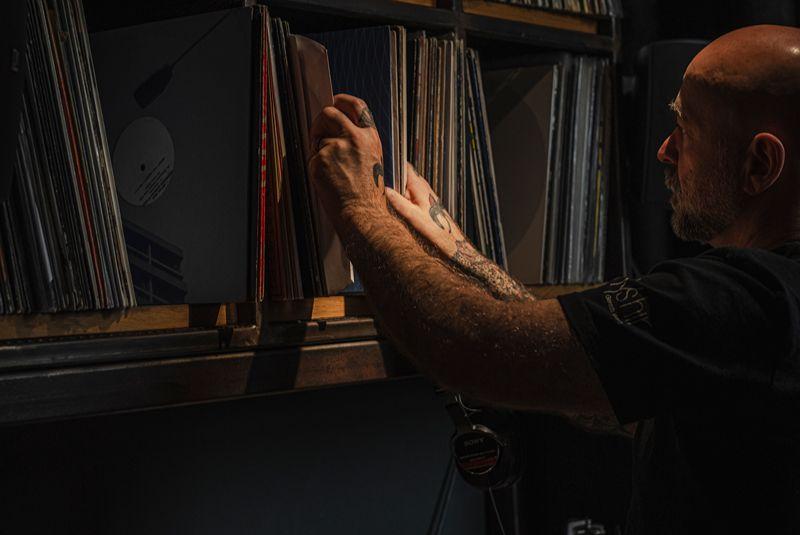
The DJ setup at Ynyshir is equipped with Bowers & Wilkins AM-1 loudspeakers
It's not surprising that many of these restaurants operate as countertops arranged around an open kitchen (Ynyshir's 14 seats also face the kitchen). The move from static fine dining to something immersive and interactive is an architectural one too. Cultivating joy and feelings of togetherness is easier to achieve when everything moves in concert. It's a show. In Mumbai, Papa's leans fully into play – with jokes, banter, tableside theatrics and even guests shaving their own kakigori-style ice. None of this would be possible without the 12-seater mise-en-scene. "The idea was never to make the guest just an observer," says Shahzad. Papa's breaks the invisible wall. "Long after they've forgotten what the food tasted like," he says, "they will never forget how they felt in that moment." 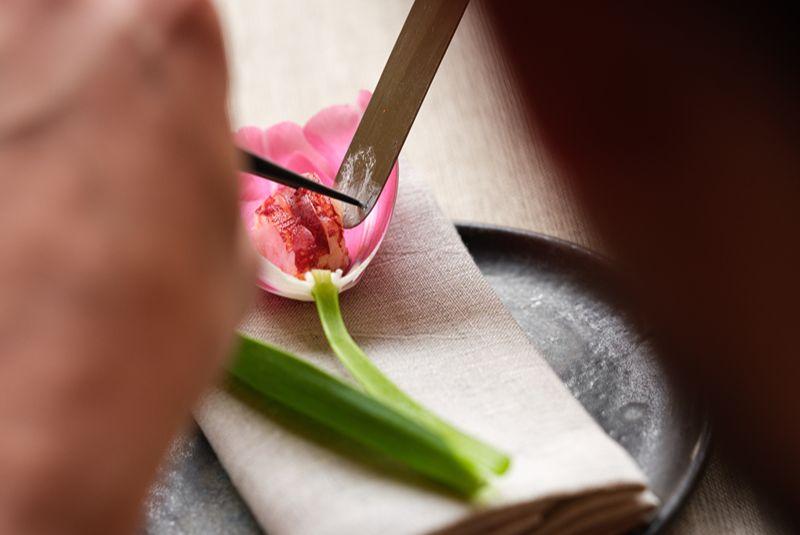
Kol's Lobster Tulip dish uses an organic, pesticide-free tulip petal as the taco shell for a Cornish lobster filling (Image: Anton Rodriguez)
That may be the case, but there's a clear affinity between this style of dining and a 'deliciousness-first' approach. Overly conceptual cooking simply doesn't fit, as "people will always be loyal to flavour," Lastra says, with Kol's current menu reflecting this belief. "Food is made to feed other people and to give pleasure," he adds. Vedove agrees, saying the first spoon must deliver pleasure, and that throughout, "guests [must] recognise what they are eating." Both Ward and Shahzad use nostalgia as a blueprint, which Shahzad believes provides a foundation for layering multiple sensory elements into the dining experience.
But in the end, shifting expectations are rewriting the rules. Fine dining is "no longer about how much caviar is on the plate," he says. "Luxury is the experience."
Discover more fantastic restaurants, bars and hotels with The 50 Discovery, and start planning your next adventure.
How fine dining went fun
.jpg)

Sign Up to Discover More
- Save top venues and articles
- Create and share your own lists
- Receive our weekly newsletter