
The Usobiaga brothers of agricultural NGO Arca Tierra say we must value farming as much as we do restaurants.
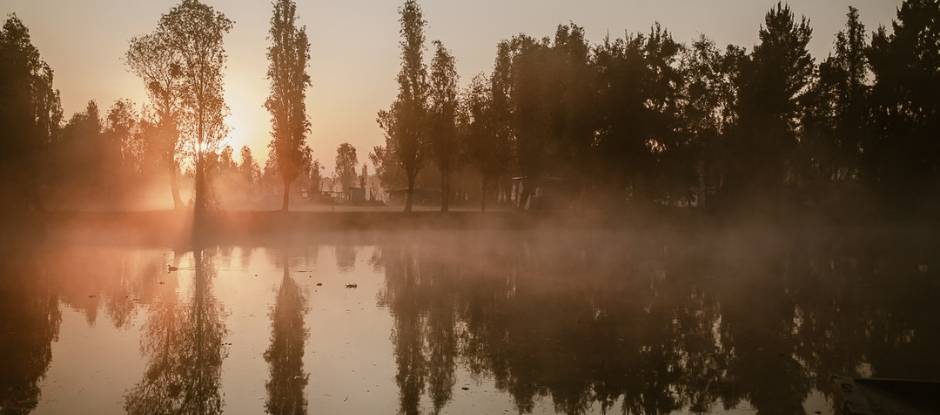
Think of Mexico City and you probably picture gridlocked traffic, high-rise buildings, leafy neighbourhoods and street vendors selling tacos. But 15 miles south of the historic centre is Xochimilco, a network of canals and floating gardens known as chinampas, where local farmers have been growing crops for hundreds of years.
Once the main food supply to the Aztec capital, the chinampas have slowly fallen out of use due to industrial farming and urban expansion. If they disappear, the consequences could be huge – the man-made floating islands act as a natural air conditioning system for Mexico City, not to mention a vital part of the food landscape, and home to endangered species such as the axolotl.
"If the chinampas disappear, the city's future would be at risk in terms of water, carbon and temperature," says Lucio Usobiaga, co-founder of Arca Tierra, a project that seeks to restore and protect this ancient farming system.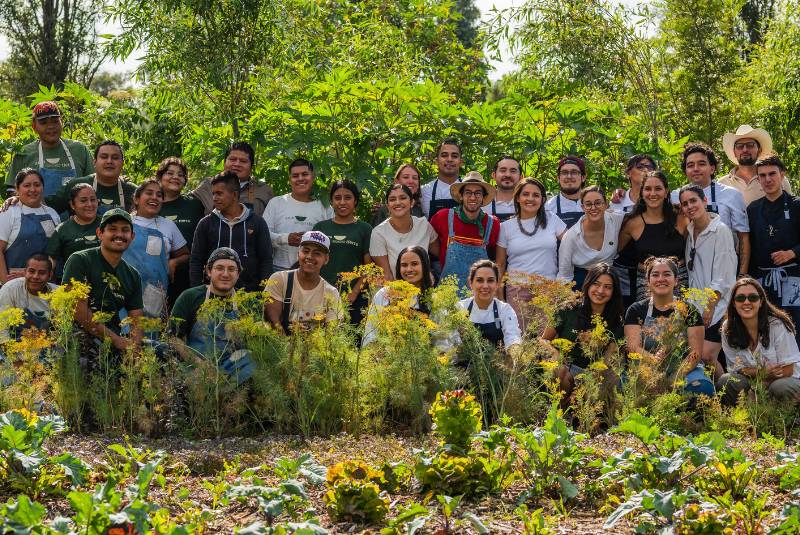
The Arca Tierra team, led by brothers Lucio and Pablo Usobiaga
Fortunately, Lucio and his brother and co-founder Pablo believe the damage can be reversed – and they've made it their mission to do so.
"You are what you eat eats"
If you've dined at Rosetta, Quintonil or Contramar in Mexico City, you may have heard of Arca Tierra, which sells ingredients to the city's top restaurants, and to individuals in the form of seasonal fruit and vegetable boxes. Everything from corn to cauliflower is grown by chinampero farmers, with the organisation helping them to achieve a fair price.
That's not all they do though. Arca Tierra has several strands, its main objective being to promote the work of rural farming communities and to encourage society to value them. The brothers run experiences in Xochimilco, educating Mexicans and tourists on the importance of provenance. As part of the tours, visitors eat a meal that's been freshly harvested in the chinampas.
"Younger generations are starting to demand more from food, but there are also people who just think it comes from the supermarket," says Pablo. "We regenerate the soil, so it's full of nutrients, microorganisms, bacteria and bugs – it's live food, with complex flavours and depth. When you eat a beetroot from live earth full of diverse nutrients, the flavours will be so much deeper. We are what we eat – that's biologically and scientifically true. But we are what we eat eats – the soil that feeds the beetroot is what matters most."
Levelling the playing field
Aside from agritourism and selling products from local farmers, the Usobiagas also run a school training young people to become chinamperos – a job seen as increasingly undesirable due to low pay, poor conditions and hard physical labour. "In the value chain, the person who produces the food earns the least money – it's a total contradiction because they're the most important of all," says Pablo, who also runs the Adopt a Chinampa programme under the non-profit, Iniciativa Agroecológica Xochimilco (IAX).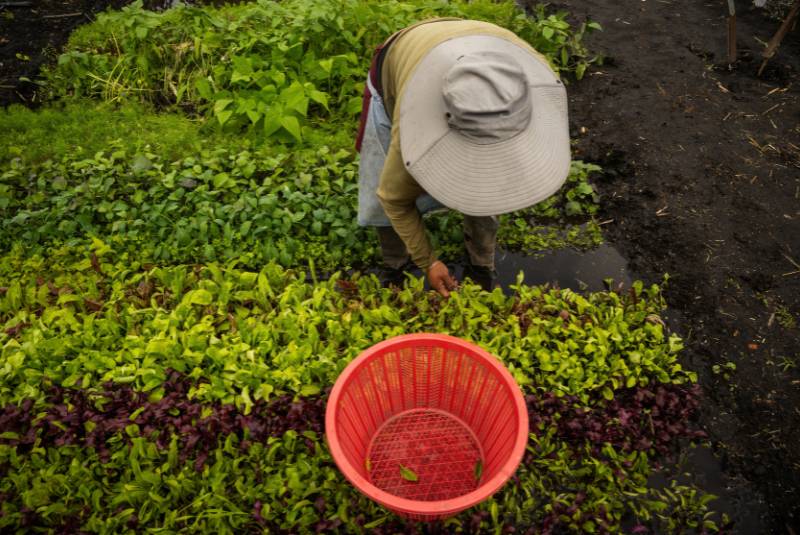
Arca Tierra supplies some of Mexico City's top restaurants
While almost two thirds of the school's students are women, the brothers have also launched a new project, Mujer Medicina, specifically teaching women to grow medicinal plants such as lemon balm, a herb said to reduce stress, improve sleep and aid digestion. Fitting 10 hours of work per week around their childcare, the women gain business and farming skills as well as independence, autonomy and community, which can help them out of difficult domestic situations.
"There's a history of sexism in Xochimilco," explains Lucio. "It's more difficult for women to access the chinampas."
Mujer Medicina launched with 25 people, each of whom pledges to share their learnings with at least three more women – and there are plans to grow and scale the project.
Infectious enthusiasm
Creating Arca Tierra wasn't always the plan. In 2009, Lucio was studying philosophy and wanted extra credits, so he took a module in agriculture. He loved it, and after finishing his master's degree, he started working in the industry, gradually getting to know rural communities. Pablo was unfulfilled in law and solar energy, but he loved hospitality. In 2021, he opened a bar, Café de Nadie, where cocktails are made from ingredients grown within Lucio's network.
It was during Covid that the brothers began working together, with Pablo suggesting they add hospitality experiences to create a much bigger impact with Arca Tierra. In 2024, they went a step further, joining forces with British chef Doug McMaster to open Baldío, a restaurant that follows the same philosophy as Arca Tierra, serving ingredients from regenerative soil in the chinampas and small farms around Mexico.
"Baldío's intention is to show there's another way to run a restaurant," says Pablo. "It can be done in a way that's not just economically viable but ecologically viable too."
After two years, the hard work is rubbing off, and Usobiaga is sure he's built the right team of chefs.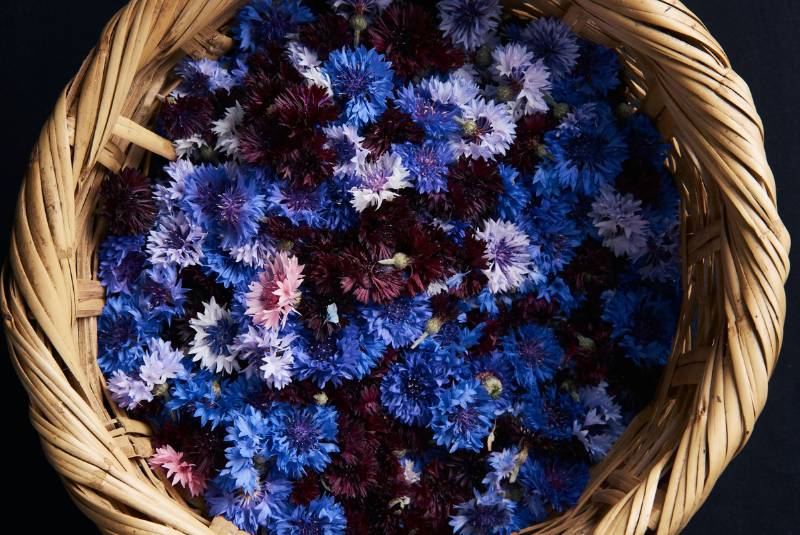
Through Mujer Medecina, Arca Tierra teaches women how to grow medicinal plants
"I'm convinced that when they leave Baldío, they won't see any other way to run a restaurant or project than how we do it now," says Pablo. "It's about changing the community, little by little, so those people spread their passion for valuing rural communities and ingredients."
Small actions, big impact
As for what the rest of us can do to help, the Usobiagas say we shouldn't underestimate the impact we can have at an individual level.
"It's a privilege to be able to choose where your food comes from, but you must use that privilege if you have it," says Pablo. "When you go to a supermarket, farmer's market or restaurant, ask questions. How are they treating people? Who are they buying from? Inform yourself, and act."
We're not powerless to solve the bigger issues either. While around 70 per cent of the chinampas are abandoned and inactive, the brothers believe a lot of the damage can be reversed if interest in agriculture is energised, alongside tourism initiatives to Xochimilco, which is part of a Unesco World Heritage Site.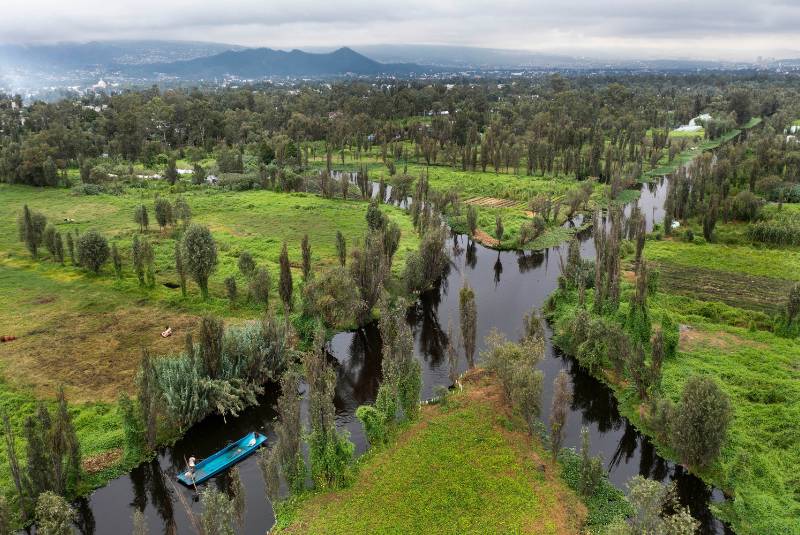
The chinampas – also known as floating gardens – have been essential to Mexico City's food supply since the Aztec Empire
"We're showing people that we can reverse the damage," says Pablo. "[Arca Tierra] has sparked similar agritourism in Xochimilco, and the government has invested more in the protection of the chinampas. What you do as an individual is important. If you do it correctly, every decision you make has an impact – and that's contagious."
Healing the world
With the right collaboration and investment, we might even be able to go further, say the brothers, whose work has won them the Champions of Change Award 2026, as part of The 50 Best Restaurants Latin America.
"The chinampas are a micro example," says Lucio. He believes that if Arca Tierra can reverse the damage in the chinampas, some of the damage to the world can start to be reversed too.
There are caveats, of course, but the award will help towards the organisation's mission.
"Usually, recognition goes to the chefs," says Lucio. "It's important to extend that recognition to everyone in the food ecosystem, which helps put us more on the map and increase our impact. We're all part of the same team."
The list of The 50 Best Restaurants Latin America 2026 (formerly known as Latin America's 50 Best Restaurants) will be revealed on 1 December live from Guadalajara, Mexico.
“Choosing what we eat is a privilege” – the brothers transforming agriculture in Mexico City

Sign Up to Discover More
- Save top venues and articles
- Create and share your own lists
- Receive our weekly newsletter